Mostrando entradas con la etiqueta conservation. Mostrar todas las entradas

12 agosto 2010

Porphyrio hochstetteri


365especies.com Biodiversidad con nombre propio (o científico)


Porphyrio hochstetteri es el nombre del Takahē, un ave no voladora endémica de Nueva Zelanda que se encuentra en serio peligro de extinción. Tiene el plumaje mayoritariamente azul, con las alas y la espalda de color verde oliva. Utiliza sus diminutas alas, inservibles para el vuelo, para el cortejo y para el combate. Su llamada de alarma es un profundo 'oomf'.

En 1898 se declaró extinta la especie, pero gracias a un concienzudo plan de búsqueda, el Takahē fue redescubierto en 1948 en el lago Anau. En la actualidad se considera una especie en peligro de extinción, con una población de apenas unos pocos centenares de individuos.

Fuente: Maungatautari Ecological Island Trust / Wikimedia Commons.

Esta pareja de Takahē fueron liberados en las Montañas de Maungatautari, North Island, Nueva Zelanda. En Junio 2006, este par de Takahē fueron llevados de dos de las islas pequeñas en las costas de New Zealand hacia la Reserva de Maungatautari como parte de un proyecto para recuperar a la especie. Estas dos aves de un año y medio de edad nunca se habían conocido antes, pero hay esperanzas de que se reproduzcan en Maungatautari y así se establezca una población en North Island. La hembra fue llamada Kina y el macho Kelly.

06 agosto 2010

La destructiva medicina tradicional china

La medicina tradicional china se ha transformado en uno de los mayores monstruos destructores de nuestro planeta, consumiendo voraz a magníficos y únicos seres vivos que en la Tierra habitan. Sumergida en olas de indolencia, ignorancia y supersticiones, la medicina tradicional china promueve día a día matanzas irracionales y estúpidas.

Miren lo que han hecho a estos preciosos seres vivos con el único banal objetivo de preparar una posión mágica para impotentes ignorantes:

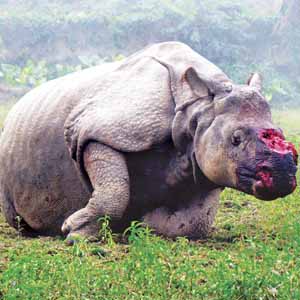
Estas fotos son ejemplos reales de rinocerontes y tigres muertos a manos de cazadores ilegales que como carniceros desgarran a estos animales para sacarles sus cuernos y testículos. A los rinocerontes les cortan sus cuernos, los cuales no vuelven a crecer y los animales mueren desangrándose lentamente.

Hace poco acaba de ser asesinada la última rinoceronte de una reserva en Sudáfrica, y los tigres están cada vez más amenazados. Rinocerontes y tigres son solo algunos de los ejemplos de genocidios que en nombre de la medicina china se realizan.

Los cuernos de los rinocerontes no son nada más que grandes bultos de queratina, nada más! No tienen ningún efecto para hacer a los hombres más atractivos, no ayudan a mejorar la erección, no incrementan el deseo sexual. No son más que queratina, es decir que daría lo mismo hacer una pila de uñas cortadas, son iguales. Los huesos de los tigres y sus testículos tampoco sirven para esos fines, déjenlos vivir en paz!

Mucho del conocimiento que se engloba dentro de las diferentes medicinas tradicionales es valioso y tiene méritos y beneficios. Obviamente no todo es válido y real, pues se fomenta en gran parte sobre creencias no verificadas y supersticiones nada reales (en especial la llamada medicina alternativa, que poco tiene q ver con la tradicional). A pesar de que los métodos de las medicinas tradicionales no son tecnificados y sus resultados y efectos no siempre demostrables, en muchos casos la razón de su funcionamiento no dista mucho de la medicina moderna. Ambas confían y usan los principios activos que existen en plantas y animales de nuestro planeta para tratar enfermedades (recordemos que más del 70% de los medicamentos que usamos vienen de la naturaleza).

Pero de ninguna manera, bajo la bandera de la flexibilidad, tolerancia y multiculturalidad se puede permitir que de manera ilegal e irracional se destruya a seres vivos con quienes compartimos nuestro planeta. Rinocerontes, tigres y demás tienen tanto derecho como nosotros para existir en este planeta, y su matanza no es sino un asesinato infame con la única finalidad de acallar el fallido orgullo de ignorantes de pene pequeño pero con gran billetera o de pobres modelos con mucha facha y poco cerebro (como Elle MacPherson, quien en un gran despliegue de hipocrecía promovió el uso de cuerno de rinoceronte como tratamiento de belleza, cuando tiempo atrás se había pronunciado en contra de restaurantes que sirven pescados en peligros de extinción, sin duda nada más que una movida publicitaria antes que un ejemplo de real amor por la vida y por nuestro planeta; leer más: http://news.mongabay.com/2010/0702-hance_macpherson.html)

Esta nota fue promovida luego de leer una nota similar en el blog Pharyngula, donde el singular EZ Myers revela una formula que promueve la virilidad, aquí pueden leer más: I hate Traditional Chinese Medicine

22 julio 2010

Parques Nacionales de Africa presentan profundas disminuciones en poblaciones de su vida silvestre

http://www.easternarc.org/pub/East_African_wild_life_society1.jpg

Numerosas especies de grandes mamíferos — incluyendo leones, jirafas y cebras — han disminuido en casi 60 por ciento en los principales parques nacionales de Africa entre 1970 y 2005, de acuerdo a un reciente estudio. Investigadores de la Zoological Society of London (ZSL) y Cambridge University, quienes crearon un índice para evaluar los cambios poblacionales en 78 áreas protegidas a lo largo de África, dicen que las disminuciones poblacionales fueron particularmente graves en África Occidental, donde las poblaciones de muchas especies de grandes mamíferos cayeron en carca del 85 por ciento ante cazadores ilegales que han aprovechado los recortes de fondos y personal que protega las áreas protegidas. En el sur de Africa, la tasa es cercana al 50 por ciento, de acuerdo al estudio publicado en la revista Biological Conservation.

La tasa de disminuciones a nivel continental, sin embargo, han disminuido en años recientes, sugiriendo que las prácticas de manejo han mejorado. Si bien los resultados son peores de lo que se esperaba, los investigadores dicen que los incrementos en el sur de África sugieren que las áreas protegidas pueden conservar exitosamente la vida silvestre si son adecuadamente financiados.

Mientras que las disminuciones de la vida silvestre en áreas protegidas han sido graves, los investigadores dicen que la peérdida de grandes mamíferos fuera de los parques nacionales y reservas ha sido catastrófica e indudablemente peor.  “Muchas especies como el rinoceronte están practicamente extintas fuera de las áreas protegidas” dijo Ian Craigie, investigador de la ZCL y autor del estudio.

Más info, leer: The Growing Specter of Africa Without Wildlife, www.e360.yale.edu

18 julio 2010

Ejecutivos ven con mayor importancia a Biodiversidad como Clave de Negocios

Un mayor número de ejecutivos corporativos, en particular en naciones ricas en biodiversidad de América Latina y África, ven a las disminuciones de la biodiversidad como un reto para el crecimiento de sus negocios, de acuerdo a un nuevo estudio del Programa de las Naciones Unidas para el Medio Ambiente (PNUMA). Más del 50 por ciento de altos ejecutivos entrevistados en América Latina y cerca de 45 por ciento en África expresaron su preocupación sobre la pérdida de “capital natural”. Sin embargo, en Europa, solo un 20 por ciento de los ejecutivos compartieron esta preocupación.

El ewstudio indica que los ejecutivos que no se preocupan por el manejo ambiental se ven afectados en sus ganancias debido a que los consumidores se han vuelto cada vez más interesados en la pérdida de la biodiversidad. De acuerdo al estudio, más del 80 por ciento de consumidores entrevistados dijeron que dejarían de comprar productos que fuesen producidos por compañias que no tengan prácticas éticas respecto a las materias primas que utilizan. Sin embargo, a pesar del incremento de la conciencia corporativa — y algunas exitosas respuestas regionales — las tasas de pérdida de la biodiversidad no han disminuido.

Más info, haga click aquí.

17 julio 2010

China seizes over 2,000 illegally trafficked pangolins

by Jeremy Hance,mongabay.com

Boarding a suspect fishing vessel in the early morning of June 6th, Chinese customs officials discovered 2,090 frozen pangolins and 92 cases of pangolin scales, weighing an astounding 3,960 pounds. Manned by five Chinese and one Malaysian national, the boat was awaiting instructions via satellite phone as to where to meet another ship to transfer the illegal cargo while still at sea.

"The use of satellite phones and trans-shipment of cargo at sea are indicative of the increasingly sophisticated methods being used by the organized criminal gangs involved in wildlife crime," said James Compton, TRAFFIC’s Asia Pacific coordinator, in a press release.

All four species of Asian pangolin are banned under the Convention on International Trade in Endangered Species (CITES). Despite the ban, pangolins remain one of the most heavily trafficked species in Asia. Illegal pangolin meat is considered a delicacy in Southeast Asia and its scales are used in traditional medicine. Some pangolins are even stuffed and displayed. The trade has pushed two species, the Chinese and Malayan or Sunda pangolin, to be evaluated as Endangered by the IUCN Red List. Despite a lack of data—given the mammals' nocturnal and shy habits—researchers believe that both of these species' populations have dropped by 50 percent in just 15 years.

The other two species, the Philippine and the thick-tailed pangolin, are classified as Near Threatened. The ecological role of pangolins in Asia has not been well-established, but since they feed on ants and termites they likely help control these populations.

The seizure is also important as it was made by Chinese officials, who have at times turned a blind eye to illegal wildlife trafficking.

From pangolins to tigers, rhinoceroses to elephants, and turtles to rodents, a wide-variety of species are threatened by the global illegal wildlife trade. East Asia, where a number of species are consumed in traditional medicines or as food, isn't the only destination: a recent report found that 270 tons of illegal bushmeat from Africa moves through one European airport (Charles de Gaulle in Paris) every year.


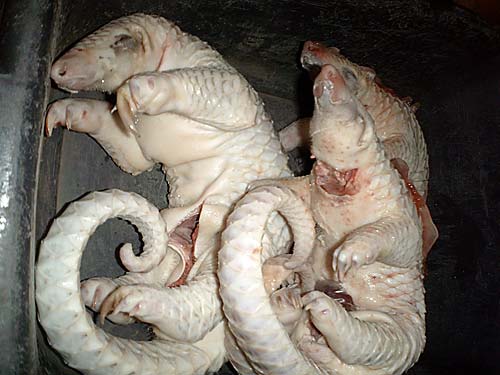
Poached pangolins descaled. The meat will be sold for food, while the scales are sold as traditional remedies. Photo courtesy of: TRAFFIC.

Montreal: El Grupo de Trabajo de ADB busca un acuerdo definitivo antes de Nagoya

Las expectativas, en Montreal, son grandes. Algunas delegaciones expresaron su firme deseo de que el Protocolo de ADB se apruebe en Japón, junto con el Plan Estratégico del CDB, que fijará las nuevas metas de protección de la biodiversidad para el período 2010-2020, y la Estrategia de Movilización de Recursos.

Los países parte del Convenio sobre la Diversidad Biológica (CDB) se encuentran reunidos en Montreal desde el pasado 10 de julio, para lograr un acuerdo sobre los detalles de un nuevo instrumento global que regule el uso de los recursos genéticos. Los resultados se presentarán en la 10 ª Reunión de la Conferencia de las Partes del Convenio en Nagoya, Japón, en octubre de este año.

"La adopción del Protocolo de Aichi Nagoya sobre acceso y distribución de beneficios (ADB) será una contribución importante para lograr no sólo los objetivos del CDB, sino también los Objetivos de Desarrollo del Milenio; así como un avance hacia el desarrollo sostenible. También será una importante contribución a la consecución y la celebración del Año Internacional de la Biodiversidad 2010 ", dijo Ahmed Djoghlaf, Secretario Ejecutivo del Convenio sobre la Diversidad Biológica.

Las expectativas, en Montreal, son grandes. Algunas delegaciones expresaron su firme deseo de que el Protocolo de ADB se apruebe en Japón junto con el Plan Estratégico del CDB, que fijará las nuevas metas de protección de la biodiversidad para el período 2010-2020 y la Estrategia de Movilización de Recursos. En mayo, cuando las Partes se reunieron en Nairobi, los países en desarrollo fueron explícitos en expresar que estos tres instrumentos forman parte de un mismo "paquete" que deberá ser aprobado en Japón, y que el fracaso de uno pondría en peligro a los otros dos.

El ADB constituye el tercer pilar del CDB; está intrínsecamente relacionado con los de conservación y uso sostenible de la biodiversidad, puesto que actúa, en términos generales, como un incentivo para la conservación de la biodiversidad. A través de acuerdos contractuales de participación en los beneficios, permitiría el flujo directo de recursos financieros y/u otros beneficios por parte de los usuarios de los recursos genéticos, especialmente del sector privado, a los países proveedores de estos recursos. Los acuerdos que contemplan ADB reconocen aquellos países que mantienen su riqueza biológica, además de concienciar sobre el valor de la biodiversidad para el desarrollo de un país.

Las negociaciones sobre ADB buscan la efectiva aplicación de las disposiciones del convenio, así como del artículo 8 (j) relativo a la distribución equitativa de los beneficios derivados del uso de los conocimientos tradicionales, innovaciones y practicas asociados a los recursos genéticos. Muchos, por lo tanto, están a la espera de que la reunión del Grupo de Trabajo sobre ADB en Montreal cumpla con su mandato y finalice las negociaciones del protocolo.

10 julio 2010

The penguin crisis: over 60 percent of the world's penguins threatened with extinction

by Jeremy Hance, mongabay.com

Everyone loves penguins. With their characteristic black-and-white 'tuxedo' markings, upright waddle, and childlike stature, penguins seem at once exotic and familiar: exotic because they live far from most human habitations, familiar because they appear innumerable books and movies. From Mr. Popper's Penguins to Happy Feet, and from March of the Penguins to And Tango Makes Three, penguins pop-up everywhere. The flightless birds have even provided the name and symbol to one of the world's most successful publishing houses. Yet despite their popularity amid the human kingdom, few people seem aware that penguins worldwide are facing an extinction crisis.

While penguins receive far less serious media coverage as opposed to other 'favorite' endangered species—such as tigers, elephants, rhinos, and whales—the plight of penguins may be as perilous as any of these. According to the IUCN Red List over 60 percent of the world's 18 penguin species are threatened with extinction. If the 'Near Threatened' category is added, the percentage jumps to over seventy.


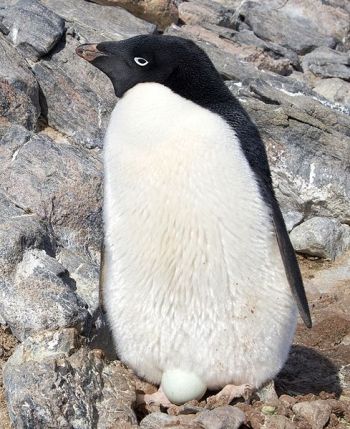
The Adelie penguin is considered Least Concern by the IUCN Red List.

What is causing so many penguin populations to hit dangerously low levels? According to penguin-expert Dr. David G. Ainley, penguin populations are plummeting because of competition with humans. But not competition over space, like most species around the world, but over food. Put simply: the industrialized world is eating penguins to extinction.

"The main threat [to penguins] is depletion of fish by industrial fishing," Ainley recently explained to mongabay.com, "and all penguin species except for the Antarctic ones, whose habitat so far is protected a bit by sea ice, have been seriously affected by this […] Penguins need lots of food, nearby, reliably available. It’s easy for fishing to negatively alter this,"

A marine biologist who has been studying penguins and other top marine predators for decades, Ainley has especially focused on the Adelie penguin: one of the minority of species that is not currently threatened. Ainley explains that this is because the Adelie penguin is native to Antarctica and outlying islands. Only four of the 18 penguin species breed on Antarctica, but they are by far the most popular species for the media.

"The Antarctic penguins are still very abundant and an appreciable number of reporters find there way to their areas. So, we get story after story after story about the penguins on the Antarctic Peninsula, to which lots of nature tours go, and little from elsewhere. Most of the other penguin species occur on offshore islands which are often harder to get to for the usual media story," Ainley explains.

After industrial fishing, other threats include human destruction of breeding areas and climate change. However, Ainley explains, that for penguins climate change is currently much less disruptive than overfishing: "climate change can not hold a candle to the changes that industrial fishing has already wrought on the marine environment. That’s the inconvenient truth that even the climate change champions can’t admit."


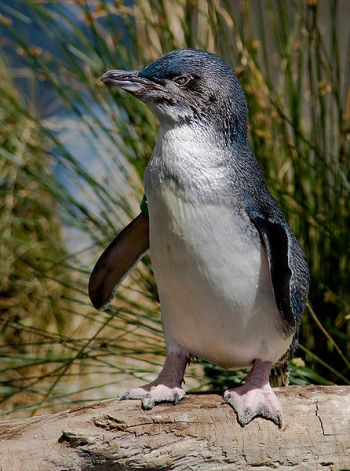
The world's smallest penguin: the little penguin.


But Ainley adds that climate change in combination with industrialized fishing will add greater pressure on penguins' food sources.

"Changed wind patterns, affected upwelling, altered ocean temperature, and eventually greater acidification which will affect process way down in the food webs relative to where penguins occur in them," he says.

As evidenced by a decline in penguin populations in most parts of the world: less food means fewer penguins.

"[Penguins'] very high energy needs make them very sensitive to food availability and other ecosystem processes that affect food," Ainley explains. "It 'costs' a lot of energy to swim in the ocean, especially the cold ocean where penguins occur. Since they don’t fly, they are very poor at searching for food. Thus, it is very necessary for there to be a lot of food in known locations."

Penguins' role as top predators, their need for an abundant number of food sources to survive, and the ease with which researchers are able to study these birds, make them good 'indicator species' of how the oceans, and especially the marine food chain, is holding up. Unfortunately the indications are not good: Ainley says that the industrialized fishing has "simplified" marine food webs to the determent of penguins and many other marine animals.

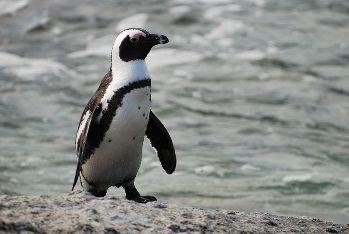
One species of penguin is also threatened by the human drive for fossil fuels. Living on the southern coast of Africa, the African penguin (Spheniscus demersus) swims and feeds in one of the busiest oil shipping regions of the world. Two spills in the last two decades—1994 and 2000—killed a total of 30,000 penguins. However, the 2000 spill also resulted in the largest bird rescue ever: with tens of thousands of volunteers helping oiled and threatened birds survive. Like its relatives, the African penguin has also suffered from overfishing.

The African penguin is considered Vulnerable to extinction.


"Add to [the oil spills] the huge alteration of the Benguela Current, owing to fish depletion, and it is little wonder that this species is critically endangered," says Ainley. He warns that other species of penguins may become threatened by oil spills as well.

"If drilling ever happens on Falklands Shelf—and this must be the reason that Argentina and UK went to war, i.e. for potential oil—then a number of penguin populations there would be vulnerable," says Ainley.

Five species of penguin breed on the Falklands, more even than in Antarctica. An oil spill near these islands could be catastrophic for the world's penguins. For now, though, the biggest threat to penguins globally remains industrial fishing.

Ainley says that people can help save the world's penguins by "asking for the establishment of marine protected areas, which are the only way to control the fishing industry and prevent the ultimate complete depletion of Earth’s marine resources."

In addition he asks penguin-lovers to avoid purchasing Chilean sea bass. The rapid decline of Chilean sea bass has affected everything from whales to seals to penguins. There have even been reports of fishermen dynamiting killer whales and sperm whales to kill their competition. The Monterey Bay Aquarium Seafood Watch program classifies this fish as one which consumers should avoid.

"As the penguins said in Happy Feet, which I thought to be a very good film, much more sophisticated and true than March of the Penguins: 'STOP EATING OUR FISH!!!'" Ainley says.

Perhaps, the penguin's popularity has proven a double-edged sword. Maybe their ubiquitous appearance in cartoons and children's books, while making the birds universally popular have also given them the stigma of fancifulness; in other words, has it become difficult for the public to realize that penguins are flesh-and-blood animals which are fighting for survival, not just media stars? If we want penguins to remain more than happy doodles, it will require changes in our laws and behavior. But such changes would help our entire marine ecosystem, from the loveable penguins all down the food chain.

Penguin Species

Endangered:
Erect crested penguin ( Eudyptes sclateri)
Galapagos penguin (Spheniscus mendiculus)
Northern rockhopper penguin (Eudyptes moseleyi)
Yellow-eyed penguin (Megadyptes antipodes)

Vulnerable:
African penguin ( Spheniscus demersus)
Fiordland penguin (Eudyptes pachyrynchus)
Humboldt penguin (Spheniscus humboldti)
Macaroni penguin (Eudyptes chrysolophus)
Royal penguin (Eudyptes schlegeli)
Snares penguin (Eudyptes robustus)
Southern rockhopper penguin (Eudyptes chrysocome)

Near Threatened:
Gentoo penguin ( Pygoscelis papua)
Magellanic penguin ( Spheniscus magellanicus)

Least Concern:
Adelie penguin ( Pygoscelis adeliae)
Chinstrip penguin ( Pygoscelis antarctica)
Emperor penguin ( Aptenodytes forsteri)
King penguin (Aptenodytes patagonicus)
Little penguin ( Eudyptula minor)


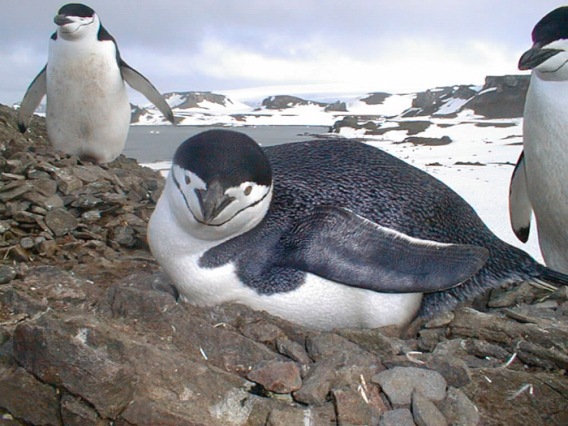
Chinstrip penguins. Photo by: NOAA/Mike Goebel.

13 diciembre 2009

Rana de Cristal en Peligro Crítico de Extinción por pérdida de hábitat

La rana de cristal Cochranella mache es un anfibio endémico del noroccidente de Ecuador, solo habita en las montañas de Mache en la Cordillera de Costa. En un reciente artículo (Cisneros-Heredia et al. 2010), publicado en la revista Oryx, The International Journal of Conservation, se revisa el rango geográfico de la especie y su actual estado de conservación. Este artículo recomienda la clasificación de esta especie de rana de cristal bajo la categoría IUCN de "Peligro Crítico" debido a su precario estado de conservación, al parecer causado por cambios climáticos locales producidos por la extensiva destrucción de los bosques.


14 agosto 2009

Polar researchers fouling nature

More than half Antarctic research stations lack sewage systems to properly dispose waste water.

Research stations in Antarctica are sullying the pristine environment by improperly disposing of sewage waste, reports a study published this month in Polar Research. Twenty-eight countries have a total of total of 82 research stations in the Earth's southern-most landmass, and "they need to take action to prevent the release of microorganisms to the Antarctic environment," said Fredrik Gröndahl of the Royal Institute of Technology in Stockholm, who led the study.

"It's phenomenally expensive to do anything down there," says Gröndahl. "But if we want to preserve Antarctica as pristine as possible, we need to take [on] the costs."

Posted at The Scientist by Alla Katsnelson at 14th August 2009 03:51 PM GMT
Read the complete story at: http://www.the-scientist.com/blog/display/55889/

25 abril 2008

COPEIA articles

Secondary Homonymy of Bufo proboscideus Spix, 1824, with Phryniscus proboscideus Boulenger, 1882

Abstract.-- Chaparro et al. (2007) placed Rhamphophryne Trueb, 1971 into the synonymy of Rhinella Fitzinger, 1826. This resulted in Bufo (Oxyrhynchus) proboscideus Spix, 1824 (formerly Rhinella proboscidea) and Phryniscus proboscideus Boulenger, 1882 (formerly Rhamphophryne proboscidea) rendered as secondary homonyms. The new name Rhinella boulengeri is provided as a replacement for the junior name, Phryniscus proboscideus.

Cita / Citation: Chaparro, J.C., Pramuk, J.B., Gluesenkamp, A.G., and Frost D.R. (2007) Secondary Homonymy of Bufo proboscideus Spix, 1824, with Phryniscus proboscideus Boulenger, 1882. COPEIA 2007(4): 1029.

Correo electrónico del autor: Juan Carlos Chaparro jchaparroauza@yahoo.com.

---------------------

A Name for the Species of Allobates (Anura: Dendrobatoidea: Aromobatidae) from the Magdalena Valley of Colombia

Abstract.-- We describe a new species of Allobates from the Magdalena Valley in Colombia. The new species and its sister species, A. talamancae, are the only two species of Allobates known to occur west of the Andes. The new species differs from A. talamancae in being smaller, possessing a diffuse pale oblique lateral stripe, and exhibiting strong swelling of finger III in adult males. Tadpoles also differ in the relative size of anterior and posterior labial papillae; in the new species anterior papillae are conspicuously larger than posterior papillae, whereas in A. talamancae they are subequal in size. Allobates talamancae and the new species are allopatric. Among the cis-Andean species of Allobates, the new species most resembles A. melanolaemus, which also possesses a diffuse pale oblique lateral stripe and a solid black throat in adult males, but from which it differs in being smaller and adult males having finger III strongly swollen and solid black pigmentation covering the chest and most of the belly..

Cita / Citation: Grant, T., Acosta, A., and Rada, M. (2007) A Name for the Species of Allobates (Anura: Dendrobatoidea: Aromobatidae) from the Magdalena Valley of Colombia. COPEIA 2007(4): 844–854.

Correos electrónicos de los autores: Taran Grant taran.grant@pucrs.br, Andres Acosta andres.acosta@javeriana.edu.co, Marco Rada radamarco@hotmail.com.

---------------------

Global Rates of Habitat Loss and Implications for Amphibian Conservation

Abstract.-- A large number of factors are known to affect amphibian population viability, but most authors agree that the principal causes of amphibian declines are habitat loss, alteration, and fragmentation. We provide a global assessment of land use dynamics in the context of amphibian distributions. We accomplished this by compiling global maps of amphibian species richness and recent rates of change in land cover, land use, and human population growth. The amphibian map was developed using a combination of published literature and digital databases. We used an ecoregion framework to help interpret species distributions across environmental, rather than political, boundaries. We mapped rates of land cover and use change with statistics from the World Resources Institute, refined with a global digital dataset on land cover derived from satellite data. Temporal maps of human population were developed from the World Resources Institute database and other published sources. Our resultant map of amphibian species richness illustrates that amphibians are distributed in an uneven pattern around the globe, preferring terrestrial and freshwater habitats in ecoregions that are warm and moist. Spatiotemporal patterns of human population show that, prior to the 20th century, population growth and spread was slower, most extensive in the temperate ecoregions, and largely exclusive of major regions of high amphibian richness. Since the beginning of the 20th century, human population growth has been exponential and has occurred largely in the subtropical and tropical ecoregions favored by amphibians. Population growth has been accompanied by broad-scale changes in land cover and land use, typically in support of agriculture. We merged information on land cover, land use, and human population growth to generate a composite map showing the rates at which humans have been changing the world. When compared with the map of amphibian species richness, we found that many of the regions of the earth supporting the richest assemblages of amphibians are currently undergoing the highest rates of landscape modification.

Cita / Citation: Gallant, A.L., Klaver, R.W., Casper, G.S., and Lannoo, M.J. (2007) Global Rates of Habitat Loss and Implications for Amphibian Conservation. COPEIA 2007(4): 967–979.

Correo electrónico del autor: Michael J. Lannoo mlannoo@iupui.edu.

---------------------

Experimental Evidence for Aposematism in the Dendrobatid Poison Frog Oophaga pumilio

Abstract.-- Brightly colored poison frogs of the family Dendrobatidae contain an alkaloid-based chemical defense against predation. The bright coloration of these frogs is generally considered an aposematic signal to potential predators; however, relatively few studies have specifically tested this hypothesis. Herein we report the results of a field-based experiment designed to test the hypothesis of aposematism in the dendrobatid frog, Oophaga (=Dendrobates) pumilio from the La Selva Biological Station, Costa Rica. We used plasticine frog models to evaluate natural predation rates as a function of color. Predation rates on brown models were almost twice that of red models, suggesting that predators avoid brightly colored frog models. Birds accounted for the majority of attacks on the models. The results of this study provide experimental evidence in support of the hypothesis that bright coloration in dendrobatids functions as an aposematic signal to predators.

Cita / Citation: Saporito, R.A., Zuercher, R., Roberts, M., Gerow, K.G., and Donnelly., M.A. (2007) Experimental Evidence for Aposematism in the Dendrobatid Poison Frog Oophaga pumilio. COPEIA 2007(4): 1006–1011.

Correo electrónico del autor: Ralph Saporito ralph.saporito@gmail.com.

---------------------

Phylogeny and Ecology Determine Morphological Structure in a Snake Assemblage in the Central Brazilian Cerrado

Abstract.-- To investigate the role of ecological and historical factors in the organization of communities, we describe the ecomorphological structure of an assemblage of snakes (61 species in six families) in the Cerrado (a savanna-like grassland) of Distrito Federal, Brazil. These snakes vary in habits, with some being fossorial, cryptozoic, terrestrial, semi-aquatic, or arboreal. Periods of activity also vary. A multivariate analysis identified distinct morphological groups associated with patterns of resource use. We report higher niche diversification compared to snakes in the Caatinga (a semi-arid region in northeastern Brazil), with fossorial and cryptozoic species occupying morphological space that is not occupied in the Caatinga. Monte Carlo permutations from canonical phylogenetic ordination revealed a significant phylogenetic effect on morphology for Colubridae, Colubrinae, Viperidae, Elapidae, and Boidae indicating that morphological divergence occurred in the distant past. We conclude that phylogeny is the most important factor determining structure of this Neotropical assemblage. Nevertheless, our results also suggest a strong ecological component characterizes a peculiar snake fauna.

Cita / Citation: França, F.G.R., Mesquita, D.O., Nogueira, C.C., and Araújo, A.F.B. (2008) Phylogeny and Ecology Determine Morphological Structure in a Snake Assemblage in the Central Brazilian Cerrado. COPEIA 2008(1): 23–38.

Correo electrónico del autor: Frederico G.R França fgrf@unb.br .

---------------------

Ecology of Anolis nitens brasiliensis in Cerrado Woodlands of Cantão

Abstract.-- We studied the ecology of Anolis nitens brasiliensis during late-dry and early-wet season 2005 in a Cerrado habitat in Tocantins state, Brazil. Most lizards were found on tree trunks or leaf litter in non-flooded igapó forest. Most were found in shade or filtered sun on both cloudy and sunny days. Body temperatures (Tbs) averaged 30.6°C and did not vary among microhabitats. Microhabitats exposed to direct sun consistently reached extremely high temperatures whereas microhabitats in shade or filtered sun provided temperatures throughout the day allowing lizard activity. Nineteen prey categories were found in lizard stomachs, but the diet was dominated by spiders, crickets/grasshoppers, ants, and beetles. Although lizards that ate large prey ate fewer prey, no correlation existed between size or number of prey and lizard body size (SVL). Males were larger in SVL and mass than females, and males had relatively longer hind limbs than females. Females were variable but larger in body width. In general, the ecology of Anolis n. brasiliensis is similar to that of its Amazonian relatives, with the exception that it lives in a more thermally extreme environment and is active at slightly higher Tbs. Ecological traits of this lizard, particularly its reliance on relatively low Tb for activity, suggest that it might be particularly vulnerable to local extinction if its habitat is altered. The presence and apparent widespread distribution of A. n. brasiliensis in the Cerrado provides further evidence that the “vanishing refuge” theory cannot account for geographical patterns of distribution in the A. nitens complex.

Cita / Citation: Vitt, L.J., Shepard, D.B., Vieira, G.H.C., Caldwell, J.P., Colli, G.R., and Mesquita , D.O. (2008) Ecology of Anolis Nitens Brasiliensis in Cerrado Woodlands of Cantão. COPEIA 2008(1): 144–153.

Correo electrónico del autor: Laurie J. Vitt vitt@ou.edu