Mostrando entradas con la etiqueta animales. Mostrar todas las entradas

02 enero 2012

Impactantes Fotos de Cómo el Mundo vio el 2011

Nuestro mundo cambió significativamente durante el año 2011, tanto su percepción política, sus perspectivas económicas y su visión ambiental. Vimos el desarrollo de la Primavera Árabe, el colapso de los mercados internacionales, el mundo azotado por desastres naturales, las personas viviendo nuevas perspectivas de vida, entre otros. Estos eventos y muchos más se presentan aquí a través de algunas impactantes fotografías.

Fotografía: Erick de Castro / AP
Danica Camacho fue declarada simbólicamente por las Naciones Unidas como el bebe número 7 mil millones. Nació el 31 de Octubre del 2011 en Manila, Filipinas. Según The World Fact Book de la NASA, Filipinas se ubica en el puesto 12 entre los países más poblados de la Tierra con 101,8 millones de personas, mientras que China (1336,7 millones), India (1189,2 millones) y Estados Unidos (313,2 millones) son los países más poblados del planeta.


Fotografía: Save The Children
Los países más pobres tienen el crecimiento poblacional más alto del planeta. Entre los 40 países con las tasas de fertilidad más altas, 38 son africanos, incluyendo a Kenia. Las sequías del 2011 que azotaron el este de África, las peores en 60 años, afectaron a más de 12 millones de personas. Esta fotografía convirtió a Umi, un bebe keniano de 3 meses de edad, en un símbolo de la difícil situación que sufren los países africanos.


Fotografía: China Daily / Reuters
Varias especies de flora y fauna están amenazadas por la extinción debido a las presiones humanas que incluyen la destrucción de los hábitats, la cacería y matanza indiscriminada, las especies introducidas, la contaminación, algunas cambios climáticos, entre otros. El Panda Gigante es una especie en peligro de extinción que es uno de los símbolos más carismáticos del movimiento conservacionista. En esta foto, investigadores vestidos como pandas preparan a un bebe panda para llevarlo a su nuevo hogar en el Centro de Investigación y Conservación del Panda Gigante de Hetaoping en Sichuan, China. Los científicos se disfrazan de pandas para asegurarse que el cachorro de seis meses de edad no tenga influencias humanas.


Fotografía: Tony Karumba / AFP / Getty Images
Pese a las regulaciones internacionales, la matanza de elefantes por sus colmillos de marfil continúa. Una pila de colmillos de elefantes asesinados ilegalmente es incinerada en el Parque Nacional Tsavo, Kenia.


Fotografía: Ilya Naymushin / Reuters
Iris, una Tigre de Amur, lame a su bebe de 7 semanas de edad en uno de los primeros recorridos que hicieron en su jaula al aire libre en el zoológico Royev Ruchey de Krasnoyarsk, Rusia. El Tigre de Amur es una especie en peligro de extinción debido a la caza furtiva y su población total es de apenas 500 individuos.


Una hembra de Macaco Negro Crestado, especie en peligro crítico de extinción, se tomó varias fotos cuando encontró la cámara de un fotógrafo de naturaleza. Fascinada por su reflejo en el lente de la cámara, esta mona se tomó varias fotografías mientras jugaba con la cámara.

06 agosto 2010

Nuevos Animales Ecuador: Nuevo Sapito Andino (Anura: Bufonidae)

Una nueva especie de sapito andino del género Osornophryne fue descubierto en la Cordillera Oriental de Ecuador y acaba de ser descrita para la ciencia. Esta colorida nueva especie ha sido nombrada Osornophryne cofanorum en honor a la étnia indígena Cofán, importante cultura nativa Ecuatoriana asentada en la región Amazónica de la frontera entre Ecuador y Colombia, en cuyo territorio fue descubierto el nuevo sapito andino.

Osornophryne cofanorum, nueva especie de sapito andino encontrado en la provincia de Sucumbíos, Ecuador. Fotografía: J.J. Mueses-Cisneros.

Este sapito andino de los Cofanes O. cofanorum vive en las estribaciones orientales de los Andes norte de Ecuador, en la provincia de Sucumbíos, a una altitud entre 2.600 y 2.800 m. Es muy similar a otra especie llamada Osornophryne guacamayo, pero las coloridas pústulas amarillas en la cabeza y dorso de la nueva especie los diferencian.

Osornophryne cofanorum es conocido hasta el momento sólo de la localidad de Alto La Bonita, donde habita en arbustos y bromelias del bosque nublado.

La descripción de esta nueva especie fue realizada en colaboración entre científicos ecuatorianos y colombianos asociados al Museo Ecuatoriano de Ciencias Naturales y la Universidad Católica del Ecuador. El artículo fue publicado en la revista científica Papéis Avulsos de Zoologia.

CITA: Mueses-Cisneros JJ, Yánez-Muñoz MH, Guayasamin JM (2010) Una nueva especie de sapo del género Osornophryne (Anura: Bufonidae) de las estribaciones amazónicas de los Andes de Ecuador. Papéis Avulsos de Zoologia (São Paulo) 50(17): 269-279. doi: 10.1590/S0031-10492010001700001.

04 agosto 2010

Eleutherodactylus portoricensis

365especies.com Biodiversidad con nombre propio (o científico)

Eleutherodactylus portoricensis


Eleutherodactylus portoricensis es el nombre científico del coquí de montaña, una pequeña rana de Puerto Rico que habita bosques de montaña por encima de 180 metros de altitud. Es de color uniforme, usualmente amarillo o crema. Durante el día la especie se oculta bajo la hojarasca del bosque, y al llegar la noche sale de sus refugios diurnos y asciende sobre la vegetación.

El nombre del género, Eleutherodactylus, significa algo así como 'dedos libres', lo que hace referencia a que en las especies de este género no hay membranas interdigitales. En cuanto al nombre común, 'coquí', se trata de una onomatopeya del sonido que emiten los machos en su llamada.

18 julio 2010

Phyllobates vittatus

365especies.com Biodiversidad con nombre propio (o científico)

Phyllobates vittatus: "

Phyllobates vittatus es el nombre científico de la rana de punta de flecha rayada, un pequeño anfibio de Costa Rica. Tiene el dorso y la cabeza de color negro, y una llamativa banda dorsolateral dorada o naranja que la recorre desde la base del muslo hasta la boca. Vive en el suelo de los bosques húmedos, y se alimenta de hormigas y otros pequeños insectos.
Es uno de los anfibios conocidos más venenosos, ya que a través de la piel secreta una sustancia llamada batracotoxina, que ataca a los músculos y al corazón produciendo arritmias y fallo cardíaco.

28 marzo 2010

Dendrobates azureus: 365especies.com

365especies.com Biodiversidad con nombre propio (o científico)

Dendrobates azureus: "

Dendrobates azureus es el nombre científico de la rana flecha azul. Este anfibio vive en el Sur de Surinam, en los bosques que rodean a la Sabana de Sipaliwini. Pesa sólo tres gramos y luce un brillante color azulado que avisa a sus posibles depredadores de que es muy, muy venenosa. Su piel está cubierta de miles de glándulas que secretan un veneno con el que puede paralizar a sus más temibles enemigos. El patrón de manchas que muestra en el dorso es único para cada rana, y funciona como una especie de 'huella dactilar' que permite su identificación. Le gustan los ambientes húmedos, por lo que pasa la mayoría del tiempo cerca de arroyos y en rocas cubiertas de musgo. En ocasiones asciende a los árboles, trepando hasta alturas de 5 metros. De hecho su nombre, Dendrobates, procede del griego y significa ‘que camina por los árboles’. En cada pata, esta rana tienen cuatro dedos con una especie de ventosa en la punta que le ayuda a mantener el equilibrio mientras camina entre las resbaladizas piedras y a escalar. Su dieta consiste principalmente en hormigas, escarabajos, moscas, ácaros, arañas, termitas, gusanos y orugas.
Las ranas flecha azul son bastante territoriales y en ocasiones se enfrascan en violentas luchas para defender su “hogar” o para conseguir pareja.

"

23 febrero 2010

Los 8 animales más increíbles del mundo

Luego de que la vida apareciese en nuestro planeta hace unos 4 mil millones de años, los procesos evolutivos han permitido la diversificación de los animales a tan gran escala que hoy en día se calcula que existen cerca de 10 a 30 millones de seres vivos en la Tierra.

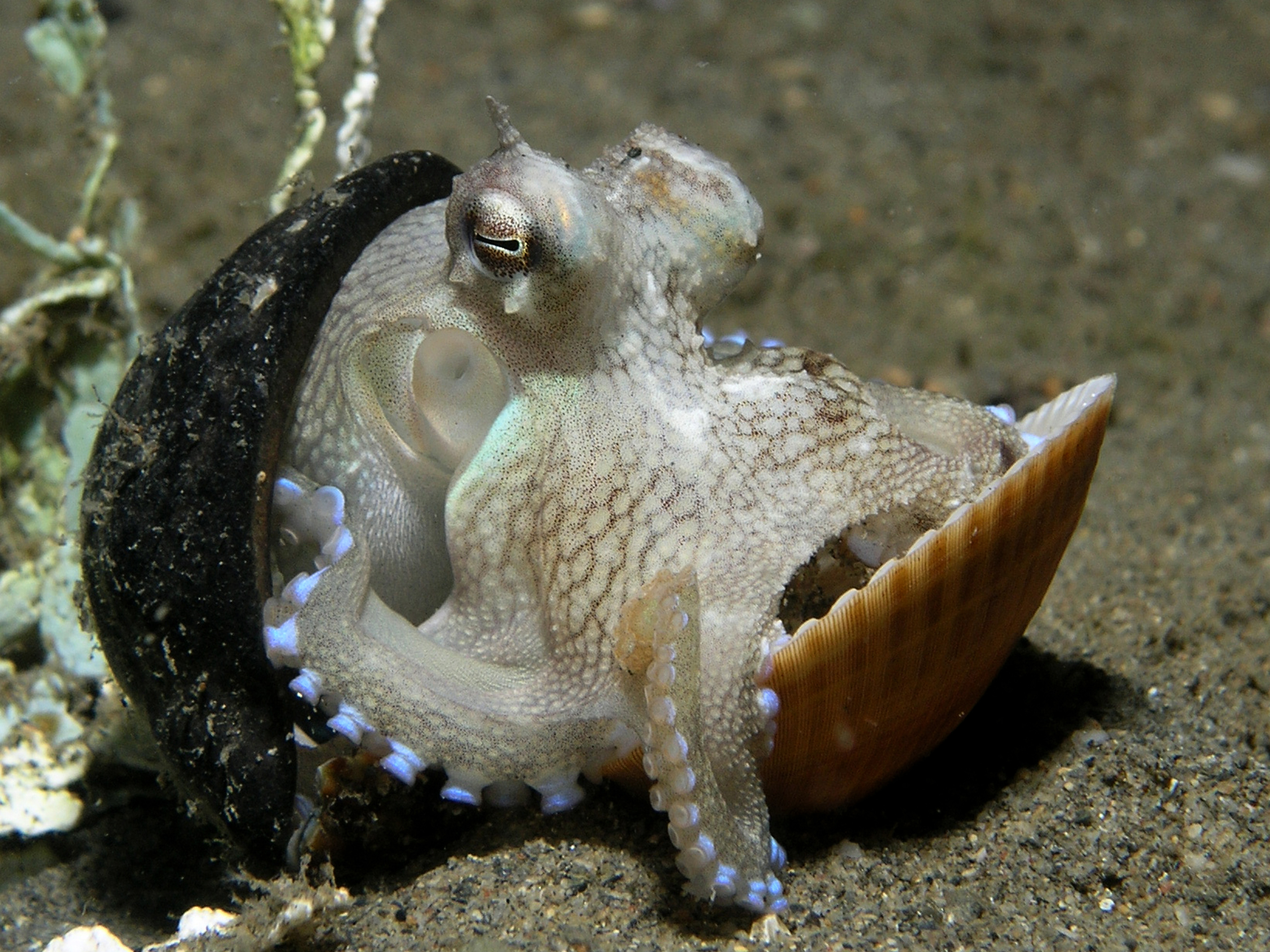
Los Pulpos
Los pulpos son una de las criaturas más inteligentes de los océanos. A pesar de que aún es poco entendido, los científicos día a día descubren nuevas e impresionantes habilidades de los pulpos. Ellos pueden jugar, navegar a través de laberintos y tienen una excelente memoria de largo plazo y muestran claros patrones de raciocinio y discernimiento. El ojo de los pulpos es muy avanzado y en extremo similar a los ojos de los vertebrados, como el de los humanos. A pesar de que el pulpo es un invertebrado, sus compleja historia evolutiva lo ha convertido en uno de los animales más listos a través de una combinación de fuerza, agilidad, curiosidad y mucho poder cerebral.

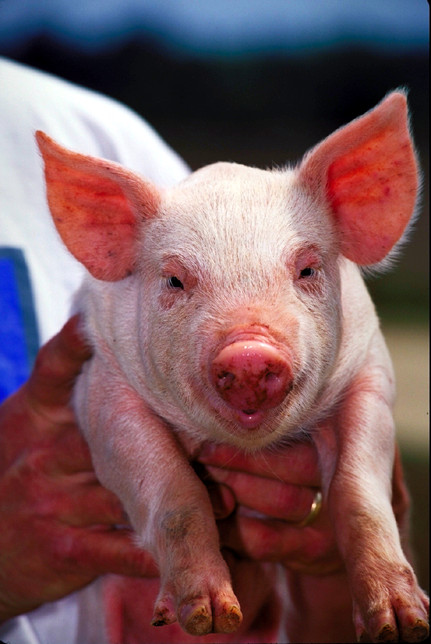
Los Cerdos
A pesar de su reputación de glotones y sucios, los cerdos son una especie muy inteligente y a quien los humanos les debemos en muchos casos nuestra supervivencia. Tanto los cerdos domésticos como los silvestres tienen habilidades de adaptación a diferentes condiciones ecológicas y pueden ser entrenados tanto como un perro o un gato, siendo extremadamente flexibles e inteligente. Su anatomía y fisiología son muy particulares y altamente similares a las de los humanos, por lo que muchos descubrimientos y avances médicos se han logrado por estudios y aplicaciones en cerdos, tal es así que incluso algunos de sus órganos como el corazón y el hígado son compatibles con nosotros.

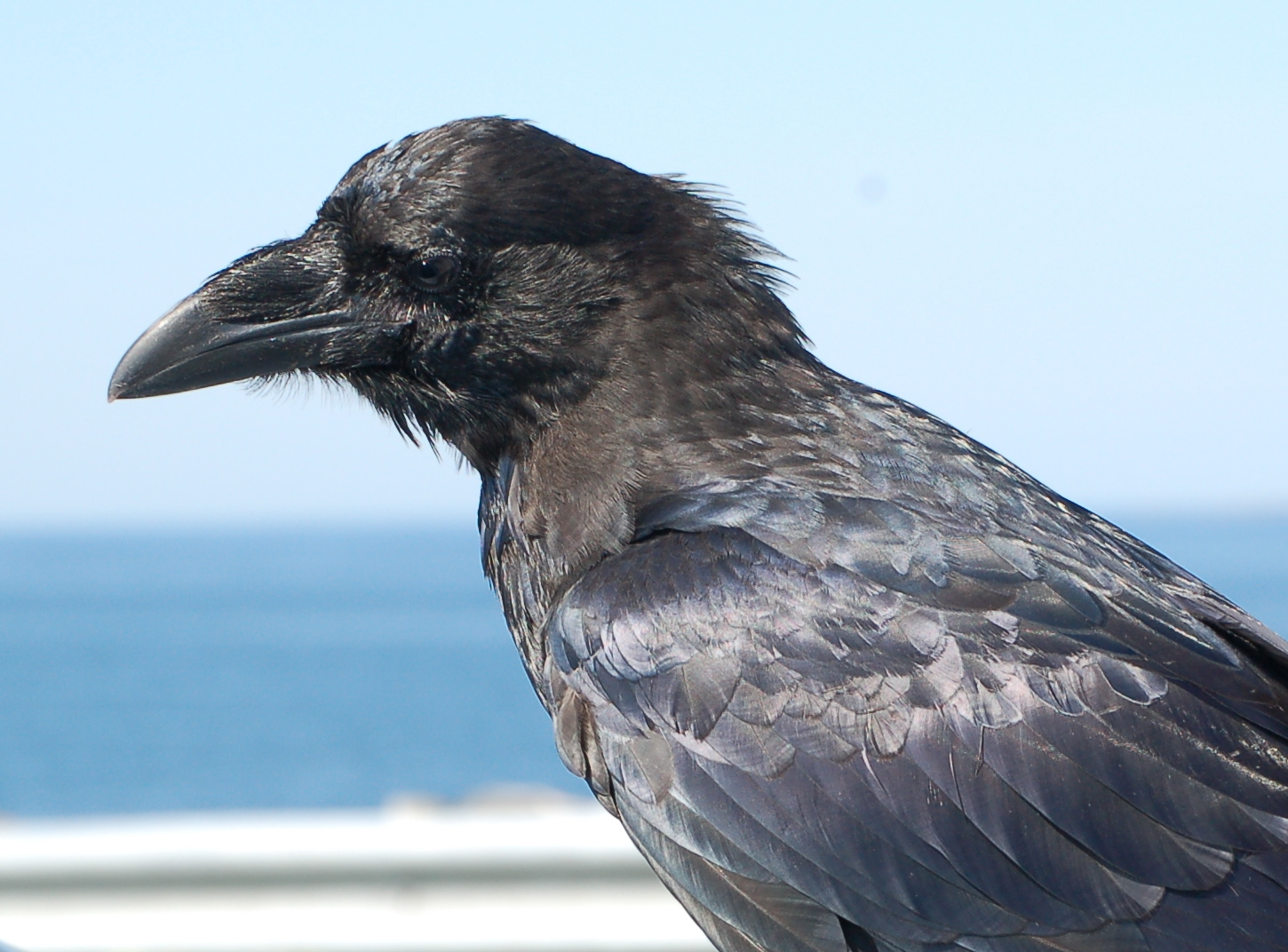
Los Cuervos
Otros animales con mala reputación debido a estereotípicas películas de terror, de hecho los cuervos están entre los animales más inteligentes del mundo. Al contrario de muchas personas, por ejemplo los cuervos que viven en ciudades han aprendido que pueden cruzar la calle cuando el semáforo se pone en verde. Sin embargo, ellos no cruzan la calle para llegar a la otra acera, lo que hacen es colectar nueces y ubicarlos en la calle, para que cuando la luz roja se encienda, los autos rompan las nueces. Luego, los cuervos esperan pacientemente a que la luz cambie, y pueden tranquilamente obtener su comida. Este es solo uno de los ejemplos que innovación, razonamiento, pensamiento proyectado, es decir inteligencia, que los cuervos tienen. Estas aves además tienen complejos sistemas de comunicación y les gusta realizar juegos de estrategia. Algunos científicos piensan que los cuervos son más inteligentes que muchos primates.

Los Jambatos o Ranas Arlequín
Estas ranas pertenecían al género Atelopus y son nativos de Centro y Sudamérica. Su nombre de ranas arlequín lo deben a sus brillantes colores. La mayoría de especies están asociadas a riachuelos de montaña, donde están activos durante el día. En Ecuador una especie, Atelopus ignescens, era muy común en los páramos de la Sierra norte, el conocido Jambato. Sin embargo, casi todas las especies de ranas arlequín han desaparecido. Las causas de esta catástrofe son una combinación de efectos de cambios climáticos con enfermedades infecciosas. Los jambatos ecuatorianos eran famosos entre nuestros indígenas no solo por su colorido, sino también porque cuando colocaban una de estas ranitas en la frente de una persona con jaqueca, esta dolencia pasaba. Al igual que todos los anfibios, los jambatos producían en su piel químicos muy complejos. Los anfibios son prácticamente farmacias ambulantes pues en muchos casos los químicos de su piel han resultado en avanzadas medicinas para males que aquejan a los humanos. Sin embargo, la extinción de los jambatos nos ha privado para siempre de una posible medicina para aliviar las jaquecas.

Los Grandes Simios, nuestros primos cercanos
Los simios, un grupo que incluye a los gorilas, chimpancés, orangutanes, gibones y humanos, están entre los animales más inteligentes del planeta. Todos estos seres tienen cerebros particularmente dotados, y todos se caracterizan por tener sistemas culturales y de comunicación muy avanzados, pudiendo fabricar y utilizar instrumentos. Las habilidades intelectuales de nuestros primos cercanos, los chimpancés, gorilas y orangutanes son tan impresionantes que nada tienen que envidiar a los humanos. Además de fabricar refugios y dar forma a materiales, tienen complejas técnicas de cacería y avanzada capacidad para solucionar problemas a través de la observación, el descubrimiento, la práctica, el raciocinio y la proyección. Los simios son capaces de asignar conceptos y definiciones a los objetos, combinar simbolos en secuencia y llegar a representar ideas completas. Además de tener sus propios sistemas de comunicación, los simios son capaces de aprender lenguajes de señas para comunicarse con los humanos y tienen una memoria de corto y largo plazo extraordinaria. Todas estas capacidades que están presentes en gorilas, chimpancés, orangutanes, y humanos se han desarrollado para mantener los complejos sistemas sociales en los que vivimos. Lastimosamente, los humanos estamos asesinando a nuestros primos más cercanos y condenándolos a la extinción. Cientos de gorilas, chimpancés y orangutanes mueren vilmente como trofeos de cacería y sus hogares; mientras que los adultos son asesinados, los bebes son capturados para el tráfico en el mercado negro y actualmente existen en muchos lugares guarderías que cuidan de estos desafortunados bebes que son recuperados, no sin traumas y la imposibilidad de volver a la naturaleza. Los bosques tropicales de África y Asia, el hogar de los grandes simios, son destruidos indiscriminadamente por industrias madereras y de aceite de palma, los orangutanes por ejemplo, han perdido más del 70% de sus bosques.

El Oso de Anteojos
El único oso de Sudamérica, también conocido como el Oso Andino o Ucumari, se caracteriza por tener un pelaje oscuro y marcas claras en la cara que en la mayoría de individuos da la impresión de formar anteojos. Es una especie relativamente pequeña, los machos pueden pesar has 200 kilos, mientras que las hembras, más pequeñas, pueden llegar a máximo 90 kilos. Se encuentran desde Venezuela hasta Bolivia y Argentina. Este oso es básicamente herbívoro, prefiriendo comer frutas y hojas que encuentra en su diario deambular por los bosques andinos. Es muy hábil y a pesar de su tamaño y peso puede fácilmente subir a los árboles. Cada camada está compuesta usualmente por dos oseznos que viven con su madre por un largo período mientras aprenden las técnicas para sobrevivir. Lamentablemente, el oso de anteojos está en peligro de extinción debido a la destrucción de sus bosques, a la invasión indiscriminada de su hábitat para el desarrollo de cultivos y a la matanza indiscriminada debido a que muchas personas consideran, obviamente sin ninguna base, que la grasa de este impresionante oso tiene propiedades curativas. Si las condiciones siguen como hasta ahora, es muy posible que nuestros nietos conozcan al Oso de Anteojos como la única especie de oso que habitaba en Ecuador y que se extinguió a principios del siglo 21.

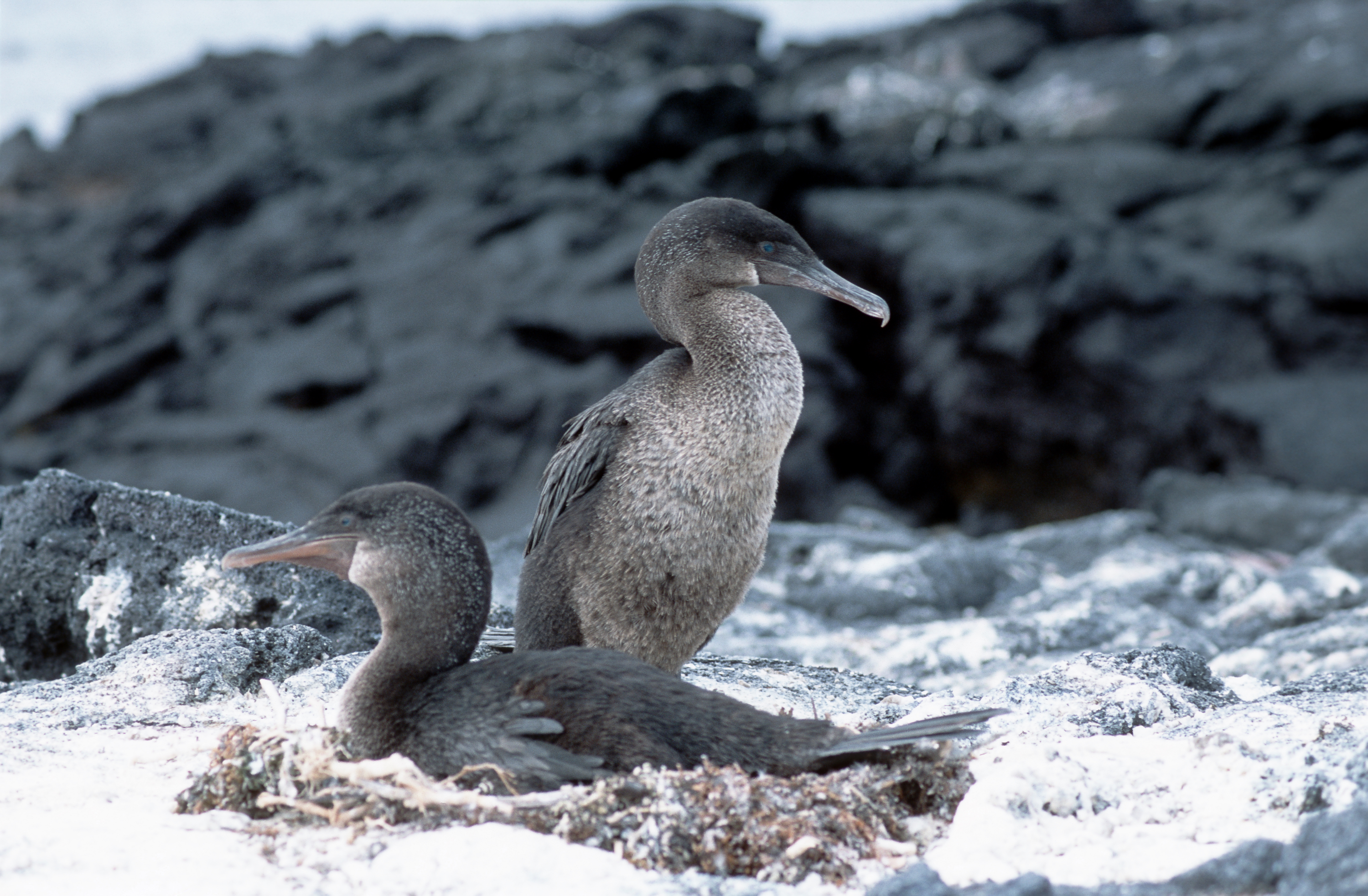
El Cormorán No-Volador de Galápagos
Este cormorán es endémico de Galápagos, es decir que solo vive en este archipiélago; y es un ejemplo de la inusual fauna que allí habita y un exquisito ejemplo de la evolución. Es único entre todas las especies de cormoranes que existen en el planeta pues es el único que ha perdido la capacidad de volar. Actualmente vive en unas pocas islas de las Galápagos, donde bucea en el mar en busca de comida y anida cerca de las costas. Con una población estimada de solo 1500 individuos, es una de las aves más raras del mundo. Debido a su pequeña población que está muy restringida geográficamente, esta especie es muy vulnerable a cambios climáticos, a la contaminación, y al ataque por parte de especies introducidas e invasoras.

13 diciembre 2009

Rana de Cristal en Peligro Crítico de Extinción por pérdida de hábitat

La rana de cristal Cochranella mache es un anfibio endémico del noroccidente de Ecuador, solo habita en las montañas de Mache en la Cordillera de Costa. En un reciente artículo (Cisneros-Heredia et al. 2010), publicado en la revista Oryx, The International Journal of Conservation, se revisa el rango geográfico de la especie y su actual estado de conservación. Este artículo recomienda la clasificación de esta especie de rana de cristal bajo la categoría IUCN de "Peligro Crítico" debido a su precario estado de conservación, al parecer causado por cambios climáticos locales producidos por la extensiva destrucción de los bosques.


27 julio 2009

New Taxonomy Centrolenidae

Phylogenetic systematics of Glassfrogs (Amphibia: Centrolenidae) and their sister taxon Allophryne ruthveni

Abstract.-- Based on a molecular phylogeny, a new phylogenetic taxonomy that is compatible with both the International Code of Zoological Nomenclature (ICZN) and the PhyloCode is proposed for Glassfrogs and their sister taxon, Allophryne ruthveni. The arrangement presented herein emphasizes the recognition of clades having (i) significant statistical support and congruence among phylogenetic estimation methods (i.e., parsimony, maximum likelihood, and Bayesian inference criteria), (ii) congruence among genetic markers, and (iii) morphological and/or behavioral distinctiveness. Also, when previously recognized groups are recovered as monophyletic or nearly monophyletic, we propose taxa that minimize the number of name changes required to make these groups monophyletic, preserving the names and contents of previous classifications (i.e., nomenclatural stability). The evolutionary proximity of Centrolenidae and Allophrynidae is recognized by combining these families into an unraked taxon, Allocentroleniae—a proposal that maintains the traditional names and species contents of Centrolenidae and Allophrynidae. We arrange centrolenid diversity in two subfamilies: Centroleninae and Hyalinobatrachinae. Within Centroleninae, the diagnosis and species content of the genera Centrolene, Cochranella, and Nymphargus are modified; Teratohyla is resurrected and modified, and Chimerella, Espadarana, Rulyrana, Sachatamia, and Vitreorana are proposed as new genera. The other subfamily, Hyalinobatrachinae, contains the new genus Celsiella and a modified Hyalinobatrachium that fully corresponds to the former fleischmanni Group. Additionally, the genus Ikakogi is described. Ikakogi could not be assigned with confidence to either subfamily and it is placed as incertae sedis in Centrolenidae. The data at hand suggest that Ikakogi tayrona is a lineage as old as the subfamilies Hyalinobatrachinae and Centroleninae. The revised taxonomy differs markedly from previous arrangements, which were based on phenetics and few morphological characters. Most of the genera defined herein are confined to distinct biogeographic regions, highlighting the importance of geography in the speciation of Glassfrogs. The principal limitation of this proposal is that it is based on an incomplete sampling of taxa (54% of the recognized Glassfrogs). Although diagnoses are based on phenotypic traits, there are several cases (16% of all species) in which the allocation of species is ambiguous because of morphological homoplasy and the lack of molecular data. Finally, in an attempt to facilitate species identification, comparison, and generic placement, we provide photographs for most (~ 96%) of the recognized centrolenid species.

Cita / Citation: Guayasamin, J. M., S. Castroviejo-Fisher, L. Trueb, J. Ayarzagüena, M. Rada, y C. Vilà. (2009) Phylogenetic systematics of glassfrogs (Amphibia: Centrolenidae) and their sister taxon Allophryne ruthveni. Zootaxa 2100:1-97.

Mas información: http://www.mapress.com/zootaxa/2009/f/zt02100p097.pdf
Phylogenetic relationships of glassfrogs (Centrolenidae) based on mitochondrial and nuclear genes

Abstract.-- Glassfrogs (family Centrolenidae) represent an exceptionally diverse group among Neotropical anurans, but their evolutionary relationships never have been assessed from a molecular perspective. Mitochondrial and nuclear markers were used to develop a novel hypothesis of centrolenid phylogeny. Ingroup sampling included 100 terminals, with 78 (53%) of the named species in the family, representing most of the phenotypic diversity described for the group. Thirty-five species representing taxa traditionally associated with glassfrogs were used as outgroups. Gene sampling consisted of complete or partial sequences of three mitochondrial (12S, 16S, ND1) and three nuclear markers (c-myc exon 2, RAG1, POMC) for a total of approximately 4362bp. Phylogenies were estimated using maximum parsimony, maximum likelihood, and Bayesian analyses for individual genes and combined datasets. The separate analysis of mitochondrial and nuclear datasets allowed us to clarify the relationships within glassfrogs; also, we corroborate the sister-group relationship between Allophryne ruthveni and glassfrogs. The new phylogeny differs significantly from all previous morphology-based hypotheses of relationships, and shows that hypotheses based on few traits are likely to misrepresent evolutionary history. Traits previously hypothesized as unambiguous synapomorphies are shown to be homoplastic, and all genera in the current taxonomy (Centrolene, Cochranella, Hyalinobatrachium, Nymphargus) are found to be poly- or paraphyletic. The new topology implies a South American origin of glassfrogs and reveals allopatric speciation as the most important speciation mechanism. The phylogeny profoundly affects the traditional interpretations of glassfrog taxonomy, character evolution, and biogeography-topics that now require more extensive evaluation in future studies..

Cita / Citation: Guayasamin, J. M., S. Castroviejo-Fisher, J. Ayarzagüena, L. Trueb y C. Vilà. (2008) Phylogenetic relationships of glassfrogs (Centrolenidae) based on mitochondrial and nuclear genes. Molecular Phylogenetics and Evolution 48:574-595.

Mas información: http://www.puce.edu.ec/zoologia/vertebrados/personal/colaboradores/jmguayasamin/index.html

Cochranella mcdiarmidi sp. nov.

A New Species of Glassfrog (Anura: Centrolenidae) from the Foothill Andean Forests of Ecuador and Peru

Abstract.-- We describe a new species of glassfrog assigned to the genus Cochranella (Amphibia: Anura: Athesphatanura: Centrolenidae) from the Foothill Evergreen forests on the southeastern Andean slopes of Ecuador and northeastern Andean slopes of Peru. The new species is characterized by its moderate-sized body (25.4–26.9 mm in adult males), medium-sized eyes (eye diameter/third disc width = 1.4–1.9), distinctive coloration in life (olive green with light spots) and in preservative (grayish lavender with pale spots), dorsal skin covered with flat warts and low tubercles, parietal peritoneum mostly white (covered by iridophores), thick ulnar folds, and extensive hand and foot webbing. In addition, we provide the first record of Nymphargus posadae from Peru, found in sympatry with the new species at the Cordillera del Cóndor..

Cita / Citation: Cisneros-Heredia, D.F., P. J. Venegas, M. Rada & R. Schulte. 2008. A new species of Glassfrog (Anura, Centrolenidae) from the Foothill Andean forests of Ecuador and Peru. Herpetologica 64(3): 342-353..

Mas información: http://www.cisneros-heredia.org/public

23 julio 2008

Centrolene condor sp. nov.

A new species of glassfrog from the elfin forests of the Cordillera del Cóndor, southeastern Ecuador (Anura: Centrolenidae)

Abstract.-- We describe a new species of glassfrog of the genus Centrolene (Amphibia: Anura: Athesphatanura: Centrolenidae) that inhabits the elfin forests of the Cordillera del Cóndor, an isolated mountain chain separated from the Cordillera Oriental of the Andes by the valley of the River Zamora. This new species is characterized by having vomerine teeth; a subacuminated snout in dorsal view and strongly sloping in profile; a tympanic annulus rather indistinct; shagreened dorsal skin with low warts and abundant spicules; a subcloacal area granular with several enameled warts; humeral spines in adult males; enameled ulnar folds; enameled metatarsal folds; a row of distinct enameled tubercles along the outer tarsal edges; and a green dorsum in life with abundant light and dark flecks. This taxon is the most distinct of a phenetic-set of species that includes Centrolene altitudinale, C. buckleyi, C. heloderma, C. hesperium, C. lemniscatum, and C. venezuelense.

Cita / Citation: Cisneros-Heredia, D.F. & Morales-Mite, M.A. (2008) A new species of glassfrog from the elfin forests of the Cordillera del Cóndor, southeastern Ecuador (Anura: Centrolenidae). Herpetozoa 21 (1/2): 49-56.

Mas información: http://www.cisneros-heredia.org/public

Osornophryne puruanta

A new species of Osornophryne (Anura: Bufonidae) from the Andean highlands of northern Ecuador

Abstract.-- Gleusenkamp & Guayasamin (2008) described a new species of the genus Osornophryne from the vicinities of Laguna de Puruanta and Laguna de San Marcos in the Andean highlands of northeastern Ecuador. The new species is the largest known member of the genus (female snout-vent length = 40.5–47.1 mm; males unknown) and is remarkable for having a smooth dorsal skin lacking conical tubercles and interspersed with numerous glandular pustules. The new species has a clutch size of about 30 eggs and is likely nocturnal.

Cita / Citation: Gluesenkamp, A. G. & Guayasamin, J.M. (2008) A new species of Osornophryne (Anura: Bufonidae) from the Andean highlands of northern Ecuador. Zootaxa 1828: 18-28.

Correo electrónico del autor: Andrew Gluesenkamp andy@gluesenkamp.com.

25 abril 2008

COPEIA articles

Secondary Homonymy of Bufo proboscideus Spix, 1824, with Phryniscus proboscideus Boulenger, 1882

Abstract.-- Chaparro et al. (2007) placed Rhamphophryne Trueb, 1971 into the synonymy of Rhinella Fitzinger, 1826. This resulted in Bufo (Oxyrhynchus) proboscideus Spix, 1824 (formerly Rhinella proboscidea) and Phryniscus proboscideus Boulenger, 1882 (formerly Rhamphophryne proboscidea) rendered as secondary homonyms. The new name Rhinella boulengeri is provided as a replacement for the junior name, Phryniscus proboscideus.

Cita / Citation: Chaparro, J.C., Pramuk, J.B., Gluesenkamp, A.G., and Frost D.R. (2007) Secondary Homonymy of Bufo proboscideus Spix, 1824, with Phryniscus proboscideus Boulenger, 1882. COPEIA 2007(4): 1029.

Correo electrónico del autor: Juan Carlos Chaparro jchaparroauza@yahoo.com.

---------------------

A Name for the Species of Allobates (Anura: Dendrobatoidea: Aromobatidae) from the Magdalena Valley of Colombia

Abstract.-- We describe a new species of Allobates from the Magdalena Valley in Colombia. The new species and its sister species, A. talamancae, are the only two species of Allobates known to occur west of the Andes. The new species differs from A. talamancae in being smaller, possessing a diffuse pale oblique lateral stripe, and exhibiting strong swelling of finger III in adult males. Tadpoles also differ in the relative size of anterior and posterior labial papillae; in the new species anterior papillae are conspicuously larger than posterior papillae, whereas in A. talamancae they are subequal in size. Allobates talamancae and the new species are allopatric. Among the cis-Andean species of Allobates, the new species most resembles A. melanolaemus, which also possesses a diffuse pale oblique lateral stripe and a solid black throat in adult males, but from which it differs in being smaller and adult males having finger III strongly swollen and solid black pigmentation covering the chest and most of the belly..

Cita / Citation: Grant, T., Acosta, A., and Rada, M. (2007) A Name for the Species of Allobates (Anura: Dendrobatoidea: Aromobatidae) from the Magdalena Valley of Colombia. COPEIA 2007(4): 844–854.

Correos electrónicos de los autores: Taran Grant taran.grant@pucrs.br, Andres Acosta andres.acosta@javeriana.edu.co, Marco Rada radamarco@hotmail.com.

---------------------

Global Rates of Habitat Loss and Implications for Amphibian Conservation

Abstract.-- A large number of factors are known to affect amphibian population viability, but most authors agree that the principal causes of amphibian declines are habitat loss, alteration, and fragmentation. We provide a global assessment of land use dynamics in the context of amphibian distributions. We accomplished this by compiling global maps of amphibian species richness and recent rates of change in land cover, land use, and human population growth. The amphibian map was developed using a combination of published literature and digital databases. We used an ecoregion framework to help interpret species distributions across environmental, rather than political, boundaries. We mapped rates of land cover and use change with statistics from the World Resources Institute, refined with a global digital dataset on land cover derived from satellite data. Temporal maps of human population were developed from the World Resources Institute database and other published sources. Our resultant map of amphibian species richness illustrates that amphibians are distributed in an uneven pattern around the globe, preferring terrestrial and freshwater habitats in ecoregions that are warm and moist. Spatiotemporal patterns of human population show that, prior to the 20th century, population growth and spread was slower, most extensive in the temperate ecoregions, and largely exclusive of major regions of high amphibian richness. Since the beginning of the 20th century, human population growth has been exponential and has occurred largely in the subtropical and tropical ecoregions favored by amphibians. Population growth has been accompanied by broad-scale changes in land cover and land use, typically in support of agriculture. We merged information on land cover, land use, and human population growth to generate a composite map showing the rates at which humans have been changing the world. When compared with the map of amphibian species richness, we found that many of the regions of the earth supporting the richest assemblages of amphibians are currently undergoing the highest rates of landscape modification.

Cita / Citation: Gallant, A.L., Klaver, R.W., Casper, G.S., and Lannoo, M.J. (2007) Global Rates of Habitat Loss and Implications for Amphibian Conservation. COPEIA 2007(4): 967–979.

Correo electrónico del autor: Michael J. Lannoo mlannoo@iupui.edu.

---------------------

Experimental Evidence for Aposematism in the Dendrobatid Poison Frog Oophaga pumilio

Abstract.-- Brightly colored poison frogs of the family Dendrobatidae contain an alkaloid-based chemical defense against predation. The bright coloration of these frogs is generally considered an aposematic signal to potential predators; however, relatively few studies have specifically tested this hypothesis. Herein we report the results of a field-based experiment designed to test the hypothesis of aposematism in the dendrobatid frog, Oophaga (=Dendrobates) pumilio from the La Selva Biological Station, Costa Rica. We used plasticine frog models to evaluate natural predation rates as a function of color. Predation rates on brown models were almost twice that of red models, suggesting that predators avoid brightly colored frog models. Birds accounted for the majority of attacks on the models. The results of this study provide experimental evidence in support of the hypothesis that bright coloration in dendrobatids functions as an aposematic signal to predators.

Cita / Citation: Saporito, R.A., Zuercher, R., Roberts, M., Gerow, K.G., and Donnelly., M.A. (2007) Experimental Evidence for Aposematism in the Dendrobatid Poison Frog Oophaga pumilio. COPEIA 2007(4): 1006–1011.

Correo electrónico del autor: Ralph Saporito ralph.saporito@gmail.com.

---------------------

Phylogeny and Ecology Determine Morphological Structure in a Snake Assemblage in the Central Brazilian Cerrado

Abstract.-- To investigate the role of ecological and historical factors in the organization of communities, we describe the ecomorphological structure of an assemblage of snakes (61 species in six families) in the Cerrado (a savanna-like grassland) of Distrito Federal, Brazil. These snakes vary in habits, with some being fossorial, cryptozoic, terrestrial, semi-aquatic, or arboreal. Periods of activity also vary. A multivariate analysis identified distinct morphological groups associated with patterns of resource use. We report higher niche diversification compared to snakes in the Caatinga (a semi-arid region in northeastern Brazil), with fossorial and cryptozoic species occupying morphological space that is not occupied in the Caatinga. Monte Carlo permutations from canonical phylogenetic ordination revealed a significant phylogenetic effect on morphology for Colubridae, Colubrinae, Viperidae, Elapidae, and Boidae indicating that morphological divergence occurred in the distant past. We conclude that phylogeny is the most important factor determining structure of this Neotropical assemblage. Nevertheless, our results also suggest a strong ecological component characterizes a peculiar snake fauna.

Cita / Citation: França, F.G.R., Mesquita, D.O., Nogueira, C.C., and Araújo, A.F.B. (2008) Phylogeny and Ecology Determine Morphological Structure in a Snake Assemblage in the Central Brazilian Cerrado. COPEIA 2008(1): 23–38.

Correo electrónico del autor: Frederico G.R França fgrf@unb.br .

---------------------

Ecology of Anolis nitens brasiliensis in Cerrado Woodlands of Cantão

Abstract.-- We studied the ecology of Anolis nitens brasiliensis during late-dry and early-wet season 2005 in a Cerrado habitat in Tocantins state, Brazil. Most lizards were found on tree trunks or leaf litter in non-flooded igapó forest. Most were found in shade or filtered sun on both cloudy and sunny days. Body temperatures (Tbs) averaged 30.6°C and did not vary among microhabitats. Microhabitats exposed to direct sun consistently reached extremely high temperatures whereas microhabitats in shade or filtered sun provided temperatures throughout the day allowing lizard activity. Nineteen prey categories were found in lizard stomachs, but the diet was dominated by spiders, crickets/grasshoppers, ants, and beetles. Although lizards that ate large prey ate fewer prey, no correlation existed between size or number of prey and lizard body size (SVL). Males were larger in SVL and mass than females, and males had relatively longer hind limbs than females. Females were variable but larger in body width. In general, the ecology of Anolis n. brasiliensis is similar to that of its Amazonian relatives, with the exception that it lives in a more thermally extreme environment and is active at slightly higher Tbs. Ecological traits of this lizard, particularly its reliance on relatively low Tb for activity, suggest that it might be particularly vulnerable to local extinction if its habitat is altered. The presence and apparent widespread distribution of A. n. brasiliensis in the Cerrado provides further evidence that the “vanishing refuge” theory cannot account for geographical patterns of distribution in the A. nitens complex.

Cita / Citation: Vitt, L.J., Shepard, D.B., Vieira, G.H.C., Caldwell, J.P., Colli, G.R., and Mesquita , D.O. (2008) Ecology of Anolis Nitens Brasiliensis in Cerrado Woodlands of Cantão. COPEIA 2008(1): 144–153.

Correo electrónico del autor: Laurie J. Vitt vitt@ou.edu

06 noviembre 2007

Bufo anderssoni synonym of Rhaebo guttatus

The taxonomic status of Rhaebo anderssoni (Melin, 1941) (Anura: Bufonidae)

Abstract.-- Bufo anderssoni Melin, 1941 is synonymised with Rhaebo guttatus (Schneider, 1799) based on direct comparison of the holotypes of both and fresh material. All characters of the former fall within the intraspecific variation of R. guttatus. The few characters used in the original description to distinguish anderssoni from guttatus (narrower interorbital space, smaller tympanum and smaller size) are not considered important interspecific differences, but rather dependent on ontogenetic development.

Cita / Citation: Barrio-Amorós, C. L. & Castroviejo-Fisher, S. (2007) The taxonomic status of Rhaebo anderssoni (Melin, 1941) (Anura: Bufonidae). Salamandra 43(4): 250-253.

Correos electrónicos de los autores: Cesar L. Barrio-Amoros cesarlba@yahoo.com, Santiago Castroviejo-Fisher santiago.castroviejo@ebc.uu.se.

Stress in Invasive Cane Toads

Invasion, stress, and spinal arthritis in cane toads

Abstract.-- The impact of invasive species on biodiversity has attracted considerable study, but impacts of the invasion process on the invaders themselves remain less clear. Invading species encounter conditions different from those in their ancestral habitats and are subject to intense selection for rapid dispersal. The end result may be significant stress on individual organisms, with consequent health problems. Our studies on invasive cane toads in Australia reveal severe spinal arthritis in c. 10% of large adult toads, associated with the same factors (large body size, frequent movement, and relatively long legs) that have enabled toads to invade so rapidly across the Australian tropics.

Cita / Citation: Brown, G. P., Shilton, C., Phillips, B. L. & Shine, R. (2007) Invasion, stress, and spinal arthritis in cane toads. PNAS 104(45). 10.1073/pnas.0705057104

Autor a quien correspondencia debe ser dirigida: Richard Shine rics@bio.usyd.edu.au

Enlace al Abstract (acceso gratis a la publicación completa en paises de Latinoamerica):
http://www.pnas.org/cgi/content/abstract/104/45/17698

04 noviembre 2007

Underestimation of Species Richness in Neotropical Frogs

Underestimation of Species Richness in Neotropical Frogs Revealed by mtDNA Analyses

Abstract.-- Background. Amphibians are rapidly vanishing. At the same time, it is most likely that the number of amphibian species is highly underestimated. Recent DNA barcoding work has attempted to define a threshold between intra- and inter-specific genetic distances to help identify candidate species. In groups with high extinction rates and poorly known species boundaries, like amphibians, such tools may provide a way to rapidly evaluate species richness. Methodology. Here we analyse published and new 16S rDNA sequences from 60 frog species of Amazonia-Guianas to obtain a minimum estimate of the number of undescribed species in this region. We combined isolation by distance, phylogenetic analyses, and comparison of molecular distances to evaluate threshold values for the identification of candidate species among these frogs. Principal Findings. In most cases, geographically distant populations belong to genetically highly distinct lineages that could be considered as candidate new species. This was not universal among the taxa studied and thus widespread species of Neotropical frogs really do exist, contrary to previous assumptions. Moreover, the many instances of paraphyly and the wide overlap between distributions of inter- and intra-specific distances reinforce the hypothesis that many cryptic species remain to be described. In our data set, pairwise genetic distances below 0.02 are strongly correlated with geographical distances. This correlation remains statistically significant until genetic distance is 0.05, with no such relation thereafter. This suggests that for higher distances allopatric and sympatric cryptic species prevail. Based on our analyses, we propose a more inclusive pairwise genetic distance of 0.03 between taxa to target lineages that could correspond to candidate species. Conclusions. Using this approach, we identify 129 candidate species, two-fold greater than the 60 species included in the current study. This leads to estimates of around 170 to 460 frog taxa unrecognized in Amazonia-Guianas. Significance. As a consequence the global amphibian decline detected especially in the Neotropics may be worse than realised.

Cita / Citation: Fouquet, A., Gilles, A., Vences, M., Marty, C., Blanc, M. & Gemmellet, N. J. (2007) Underestimation of Species Richness in Neotropical Frogs Revealed by mtDNA Analyses. PLoS ONE 2(10): e1109. doi:10.1371/journal.pone.0001109

Acceso libre al artículo y al pdf / Open access to the article and its pdf: http://www.plosone.org/article/info%3Adoi%2F10.1371%2Fjournal.pone.0001109

<<PLoS ONE (eISSN-1932-6203) is an international, peer-reviewed, open-access, online publication. PLoS ONE welcomes reports on primary research from any scientific discipline. PLoS ONE is published by the Public Library of Science (PLoS), a nonprofit organization. PLoS ONE's start-up phase is supported by a grant from the Open Society Institute.>>

09 octubre 2007

Cochranella erminea sp. nov.

Cochranella erminea, a new species of Centrolenidae (Amphibia: Anura: Athesphatanura) from Amazonian Peru)

Abstract.--We describe a new species of Centrolenidae, Cochranella erminea n. sp., from the Amazonian lowlands of the department of Junín, Peru. This new species is diagnosed from other centrolenids by having vomerine teeth, bones green in life, parietal peritoneum and pericardium white, all other visceral peritonea clear, dorsum in life viridian to olive green with abundant enameled (bright white) flecks/spots on flat warts, and scattered larger dark blue spots on warts, extensive webbing between outer fingers, snout in profile slightly sloping anteroventraly, and rounded in dorsal view, iris in life between light grey and slate gray with fine darker gray reticulations. We also present new information on the distribution of C. truebae and C. ametarsia in Peru..

Cita / Citation: Torres-Gastello, C.P., J. Suarez-Segovia, J. & D.F. Cisneros-Heredia. 2007. Cochranella erminea, a new species of Centrolenidae (Amphibia: Anura: Athesphatanura) from Amazonian Peru. Journal of the National Museum (Prague), Natural History Series 176 (1): 1-12.

Mas información: http://www.cisneros-heredia.org/public

31 agosto 2007

Nymphargus new genus

Revision of the characters of Centrolenidae (Amphibia: Anura: Athesphatanura), with comments on its taxonomy and the description of new taxa of glassfrogs

Abstract.--Anurans of the family Centrolenidae are a diverse clade of arboreal frogs distributed across tropical America. Knowledge of their taxonomy, systematics, ecology, behavior, morphology, and other evolutionary aspects of their biology is deficient. Relationships among centrolenid species remain largely unresolved, with no satisfactory phylogenetic hypothesis, and none of the current genera has compelling evidence of monophyly. Further, understanding the phylogeny of glassfrogs is constrained by species-level taxonomic problems, including incorrect description of characters, incomplete analyses of intraspecific variation, and lack of appreciation of species diversity. Herein, we define and analyze the 23 characters that are useful, in combination, in diagnosing centrolenid species, and thereby provide a reference for the use of future workers. We propose revised classifications for the parietal and visceral peritoneal pigmentation, liver form and coloration of its associated hepatic peritoneum, nuptial excrescences, and hand ornamentation. We comment on the generic and species-level taxonomy of Centrolenidae, proposing the recognition of a new genus and describing a new species from Ecuador. We treat Hyla ocellifera Boulenger as a synonym of Centrolene prosoblepon (Boettger), Hyalinobatrachium cardiacalyptum McCranie & Wilson as a synonym of Hyalinobatrachium chirripoi (Taylor), and Hyalinobatrachium crybetes McCranie and Wilson as a synonym of Hyalinobatrachium colymbiphyllum (Taylor). We also present an annotated list of the species of glassfrogs from the Republic of Ecuador with some distributional remarks.

Resumen.--Los anuros de la familia Centrolenidae forman un clado diverso de ranas arbóreas distribuidas a lo largo de América tropical. El conocimiento sobre su taxonomía, sistemática, ecología, comportamiento, morfología y otros aspectos biológicos y evolutivos es deficiente. Las relaciones entre las especies de centrolénidos permanecen ampliamente sin resolver, sin hipótesis filogenéticas satisfactorias y todos los géneros actuales tienen evidencia clara de su no-monofília. Más aún, el entendimiento de la filogenia de las ranas de cristal está limitado por problemas taxonómicos al nivel de especies, incluyendo la descripción incorrecta de caracteres, análisis incompletos de la variación intraespecífica y la falta de apreciación de la diversidad de especies. En este trabajo, nosotro definimos y analizamos los 23 caracteres que son útiles, en combinación, para diagnosticar todas las especies de centrolénidos, proveyendo una referencia para el uso de futuros investigadores. Proponemos clasificaciones revisadas para la pigmentación de los peritoneos parietal y visceral, la forma del hígado y la coloración del peritoneo hepático asociado, las excrescencias nupciales y las ornamentaciones manuales. Comentamos sobre la taxonomía a nivel genérico y específico de Centrolenidae, proponiendo el reconocimiento de un nuevo género y la descripción de una nueva especie de Ecuador. Colocamos a Hyla ocellifera Boulenger como un sinónimo de Centrolene prosoblepon (Boettger); a Hyalinobatrachium cardiacalyptum McCranie & Wilson como sinónimo de Hyalinobatrachium chirripoi (Taylor); y a Hyalinobatrachium crybetes McCranie and Wilson como sinónimo de Hyalinobatrachium colymbiphyllum (Taylor). Presentamos una lista anotada de las especies de ranas de cristal de la República del Ecuador con algunos comentarios sobre su distribución.

Cita / Citation: Cisneros-Heredia, D. F. & R. W McDiarmid. 2007. Revision of the characters of Centrolenidae (Amphibia: Anura: Athesphatanura), with comments on its taxonomy and the description of new taxa of glassfrogs. Zootaxa 1572: 1-82.

Descargar el pdf de este artículo: HAZ CLICK AQUI
Mas información: http://www.cisneros-heredia.org/public

27 agosto 2007

Centrolene durrellorum sp. nov.

A new species of glassfrog of the genus Centrolene from the foothills of Cordillera Oriental of Ecuador (Anura: Centrolenidae)

Abstract.--A new species of frog of the family Centrolenidae is described from Ecuador, Centrolene durrellorum sp. nov. This new taxon is the first species of the genus Centrolene known to inhabit the central and southern foothills of the Cordillera Oriental of Ecuador. The new species is diagnosed from other centrolenid taxa by its moderate body size (25.7–26.1 mm adult males), uniform coloration (green in life, pale lavender in preservative), rounded snout in dorsal and lateral views, presence of medium-sized straight humeral spines with a moderate spiny point in adult males and absence of guanophores on the visceral peritonea.

Cita / Citation: Cisneros-Heredia, D. F. 2007. A new species of glassfrog of the genus Centrolene
from the foothills of Cordillera Oriental of Ecuador. Herpetozoa 20 (1/2)
: 27-34.

Mas información: http://www.cisneros-heredia.org/public

23 agosto 2007

Cochranella buenaventura sp. nov.

A NEW SPECIES OF GLASSFROG (CENTROLENIDAE) FROM THE SOUTHERN ANDEAN FOOTHILLS ON THE WEST ECUADORIAN REGION

Abstract.--Cochranella buenaventura sp. nov. is described from the southern foothills of the Cordillera Occidental, Andes of Ecuador. The new species inhabits the Seasonal Foothill Evergreen forests of the province of El Oro, in the West Ecuadorian biogeographic region. This species is distinguished from other species of glassfrogs by having a truncate snout in dorsal and lateral views, reduced webbing between fingers, absence of guanophores on the digestive visceral peritonea, but present on the renal capsule, absence of humeral spine, green dorsum in life with scattered pale yellow spots, bright yellow hands and feet discs, and moderate body size (20.9-22.4 mm snout-vent length in adult males).

Cita / Citation: Cisneros-Heredia, D. F. & M. H. Yánez-Muñoz. 2007. A NEW SPECIES OF GLASSFROG (CENTROLENIDAE) FROM THE SOUTHERN ANDEAN FOOTHILLS ON THE WEST ECUADORIAN REGION. South American Journal of Herpetology 2(1): 1-10.

Mas información: http://www.cisneros-heredia.org/public